Some companies start because the market is ready for them.
eID Easy did not.
In 2016, the original idea was simple: make it easy for any website to let people log in, create an account, or sign an agreement using their electronic identity. The first version came out of a hackathon and was designed to make the technology almost as easy to add as a single line of code.
The idea made perfect sense in Estonia. Outside Estonia, things were more complicated.
What followed was a hackathon project, a very quiet few years, a pandemic-driven restart, a bet on identity-based signatures, and eventually a platform used by some of the world’s best-known eSignature companies.
For eID Easy’s tenth anniversary, we sat down with co-founder João Rei to talk about what happened, what nearly did not happen, and why he believes the biggest shift may still be ahead.
This interview has been edited for length and clarity.
Ten years in 30 seconds
2016: A hackathon project makes it easier for Estonian websites to add electronic identity and signing.
2017–2020: The idea proves difficult to export. eID Easy continues serving a handful of customers and more or less pays for its own servers.
2020: Remote signing becomes an immediate practical need. Interest starts coming in again.
After 2020: The team grows, the company raises its first funding, focuses on identity-based signatures, and begins working with major international eSignature platforms.
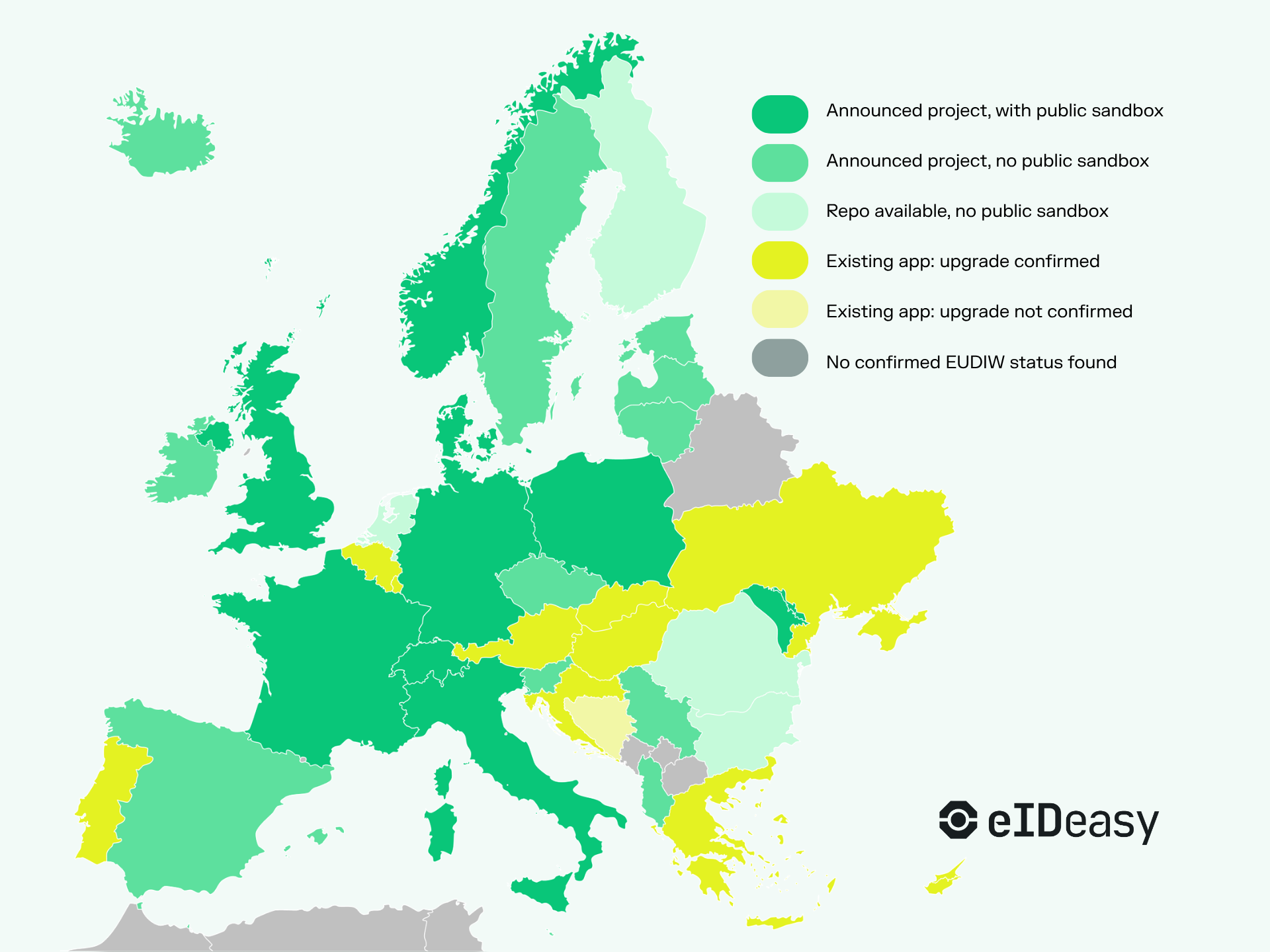
2026: Ten years in, eID Easy is expanding its digital identity coverage again as wallets and reusable digital identities move closer to everyday adoption.
Take us back to 2016. What was the original idea?
The idea was very simple: make electronic identity easy to add to any website.
Someone should be able to log in, create an account, or sign an agreement using their ID card, without the website having to build all of that technology itself. The hackathon version was essentially: add this functionality with one line of code.
At the very beginning, it was an Estonian project. But Estonia is a very small market, so if we wanted to turn it into a meaningful business, we had to see whether the same idea could work in other countries. We started with the Baltics and then looked further out.
It sounds like a sensible idea. Why didn’t it take off immediately?
Because we were early.
At the time, electronic identity usually meant a physical ID card with a chip. A lot of European countries had issued those cards, but that did not mean people actually used them online.
People often did not know their PIN codes. They might use the card to access a government service, but they were not using it to log into their bank, sign a commercial agreement, or create an account on a private website.
Estonia was different because banks and telecom companies had adopted the same identity tools. People used them in both the public and private sectors. In many other countries, electronic identity remained a government initiative.
Meanwhile, passwords, code cards, two-factor authentication, and little PIN calculators worked well enough. There was not much pressure to replace them.
We could make the technology easier for websites to integrate, but we could not make citizens start using their national ID cards. It was a chicken-and-egg problem.
What did eID Easy look like during those quiet years?
From around 2017 to 2020, it was basically in the parking lot.
There were a handful of customers, mostly in Estonia, and the project was self-sustainable. It paid the servers, but that was about it.
We did not quit our jobs, hire a large team, or bet the house on it. We had tried to take it outside Estonia, and the market clearly was not ready, so we let it continue quietly.
Looking back, that was probably the right decision. Had we raised a lot of money earlier and tried to force the market to move, we might simply have run out of money before the demand arrived.
It followed the timeline it had to follow. Any other way, we might not be here today.
“It paid the servers, but that was about it.”
What pulled the project out of the parking lot?
The pandemic created an immediate need for remote signing.
People could no longer go somewhere in person just to sign a document. Website traffic started increasing, and we began receiving more requests for electronic signing and authentication.
Authentication already had alternatives, even if some of them were not particularly secure. Signing was different. In many cases, the alternative was physically going somewhere, and suddenly that was no longer possible.
That was when we looked at the project again and thought: the world may finally be moving in this direction.
We started putting together a team and raising the first funding to take it more seriously.
At that point, why did you decide to focus on signatures?
With limited resources, the identity verification market was difficult for us to attack directly.
Document-scanning companies could offer global coverage because every country has identity documents. We were dependent on governments and local providers building digital identity infrastructure, and then on people actually adopting it.
We could not make people in Germany, India, or any other country suddenly start using a national digital identity. Even with unlimited money, that was not something we could control.
So we kept the identity product, but focused our resources on signatures. More specifically, signatures connected to someone’s verified identity.
We wanted to move the conversation away from a scribble placed on a PDF and towards a signer whose identity had actually been checked. That allowed us to bring together national eIDs, Bank IDs, Smart-ID, qualified signatures, and other trusted methods under a clearer idea: identity-based signatures.
Who were the first major customers?
We first had some local and Baltic customers. The bigger shift came when we began approaching document management systems and eSignature platforms.
Zoho and PandaDoc were among the first major platforms from that group. Over time, more large international companies began working with us, including Dropbox Sign and Docusign.
I remember when Zoho was preparing to go live. I told MJ, our co-founder and CTO
“Make sure the servers are ready. Zoho is going live.”
Then it went live and… crickets. Almost nothing happened.
There was no enormous wave of transactions. It was the second time we had expected that kind of immediate traffic, and it was a useful wake-up call.
We had once again overestimated how quickly end users would adopt the technology. The integration was still valuable to the customer, but that value was not necessarily visible through transaction volume on day one.
Did that change how you built the business?
Yes. It eventually led us away from simple transactional, cost-plus pricing and towards pricing based on the value we were providing.
We already had very good customer names, but we were not capturing enough of the value that our technology created for them.
Realising that, and changing the pricing model, probably saved the company.
The other major decision was the earlier one: focusing on signatures. Those were the two decisions where I can look back and say, yes, those were the right decisions at the right time.
When did you first think, “Okay, we are really onto something”?
There were a few moments.
- When we approached European eSignature platforms, they immediately understood the problem and the value we were offering. That gave us confidence that the need was real.
- Then larger international companies, including companies from the US, wanted to use our solution. When recognised brands understand the pain, understand what you are offering, and are prepared to work with a small company, that gives you a certain amount of validation.
- On the identity side, we also continued receiving inbound requests, particularly from KYC companies, even when identity was not our main commercial focus. That showed us there was demand waiting there too.
What did you get wrong in 2016?
We overestimated the adoption curve.
We thought we could take what was happening in Estonia, introduce it elsewhere, and watch the rest of the world catch up. But every country has its own path.
We also carried over some very Estonian assumptions. Here, people understand that PIN 1 is used for authentication and PIN 2 is used for signing. We assumed providers elsewhere would think about identity and signing in the same way.
They do not.
Some providers only offer identity. Some only offer signatures. Some offer both. The structures, terminology, technology, and level of adoption differ from country to country.
You cannot copy and paste Estonia into the rest of the world.
And what did you get right?
The core idea that people would prefer to use a trusted method they already know.
If someone regularly uses a national eID, Bank ID, or another trusted local provider, it makes sense to let them choose that instead of forcing everyone through the same document-upload process.
We also made the right decision not to become another document-scanning company. Had we built that product too, we would simply have been another company doing the same thing.
Partnering with those companies could have happened earlier, but trying to become one of them would not have given us the same reason to exist.
Has the world caught up with the original idea yet?
Honestly, I think we are still ahead of the curve.
The curve is moving, but reusable digital identity is still in its early days. The important difference is that we can now see the infrastructure, regulation, providers, and real demand beginning to come together.
The EUDI Wallet rollout is particularly important. Our biggest challenge has always been adoption. If digital identity wallets bring widespread adoption across Europe, that addresses the problem we first encountered ten years ago.
The demand is no longer purely theoretical. Companies are preparing for it, providers are building for it, and the market is moving in the same direction. It is just not moving at the same speed everywhere.
Looking beyond Europe, where do you see the most interesting opportunities?
LatAm is particularly interesting because there is a lot of trade between countries, while local identity and trust providers remain fragmented.
That is exactly the type of environment where an aggregator makes sense: companies need to serve customers across several markets, but they do not want to build a separate integration for every local provider.
Parts of Africa also have an opportunity to leapfrog older technologies. Instead of going through a long period of physical ID cards with chips, some countries may move directly towards newer mobile-based models. The infrastructure can move quickly, although widespread adoption will still take time.
The US is different. It is a gigantic market, so it cannot be ignored, but it is challenging.
There is no national identity framework. Mobile driver’s licences are developing at the state level, and having the technology available does not automatically create enough users or useful places to use it.
On the signature side, the familiar Docusign-style electronic signature is already deeply established. For many US companies, especially those operating only in the US, there is currently little pressure to do something different.
That makes the US both a major opportunity and a difficult market to change.
Fast-forward another ten years. What does digital identity look like in 2036?
I think most people will be comfortable carrying a reusable way to prove their identity in an app, wallet, phone, or whatever device we are using by then.
They will not need to send the full contents of their identity document every time. They will be able to choose what information they share and who is allowed to see it.
We should also have stronger privacy mechanisms that prevent organisations from collecting or using more identity data than they actually need.
I do not think there will be one universal provider controlling everything. It will be a distributed network of trusted providers that people in different countries already know and are comfortable using.
And uploading a photograph of your identity document, or taking a selfie for some random website, will feel very old-fashioned.
A few quick ones
What would the 2016 version of you find hardest to believe about eID Easy today?
That 9 out of the world’s top 10 eSignature platforms use our API.
The number of countries we cover would also have been difficult to imagine. And while building a real business was always the goal, it is still very rewarding that we actually managed to do it.
Describe the first ten years of eID Easy as a film title.
Die Hard. I’ll just leave it with that.
What message would you send back to the founders in 2016?
Keep going. Do not give up yet.
And start looking earlier at what comes after physical ID cards with chips and traditional document-scanning technology.
What was the least easy part of building eID Easy?
Finding investors who were crazy enough to believe in the same future we believed in.
We were telling people that most signatures would eventually be connected to verified identities. That was not obvious to many investors at the time.
Complete the sentence: eID Easy probably would not exist today without…
The resilience of the people who kept it going through the slow years.
It would not exist without the providers and partners who understood that we could bring value to their businesses. We depend completely on their services and on people adopting those services around the world.
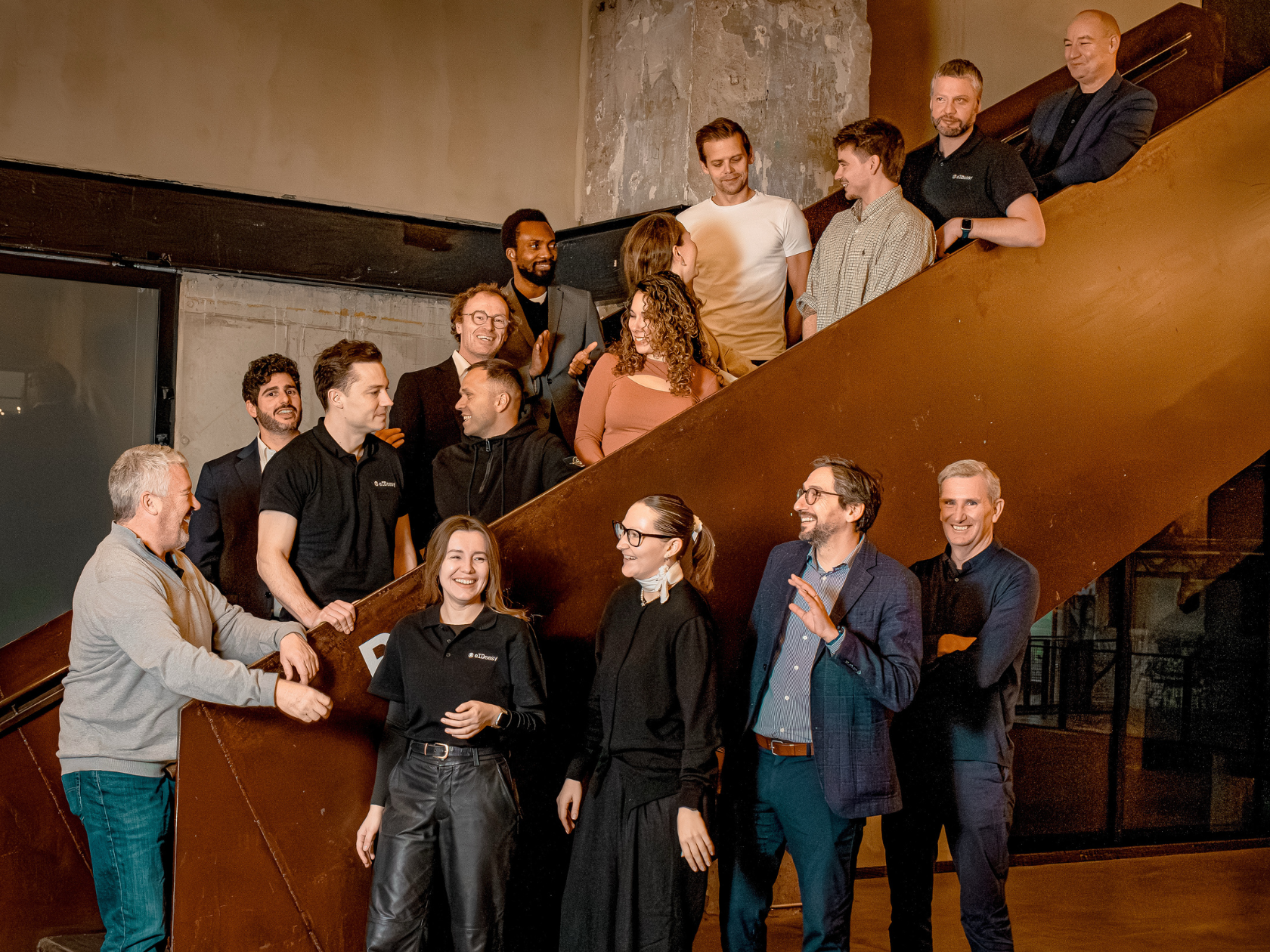
And it would not exist without the team.
We have been fortunate to attract very talented people who could have chosen to work almost anywhere. Some came with years of experience in the identity and trust industry. Others arrived without knowing much about it and chose to take on the challenge anyway.
Both groups decided to build this with us. That is one of the things I am most proud of.
Ten years in, eID Easy’s story is not one of perfect timing or overnight success.
It is the story of a good idea arriving early, being parked rather than abandoned, and finding its moment when the practical need finally began to catch up.
The world was not ready in 2016.
It is getting closer.